
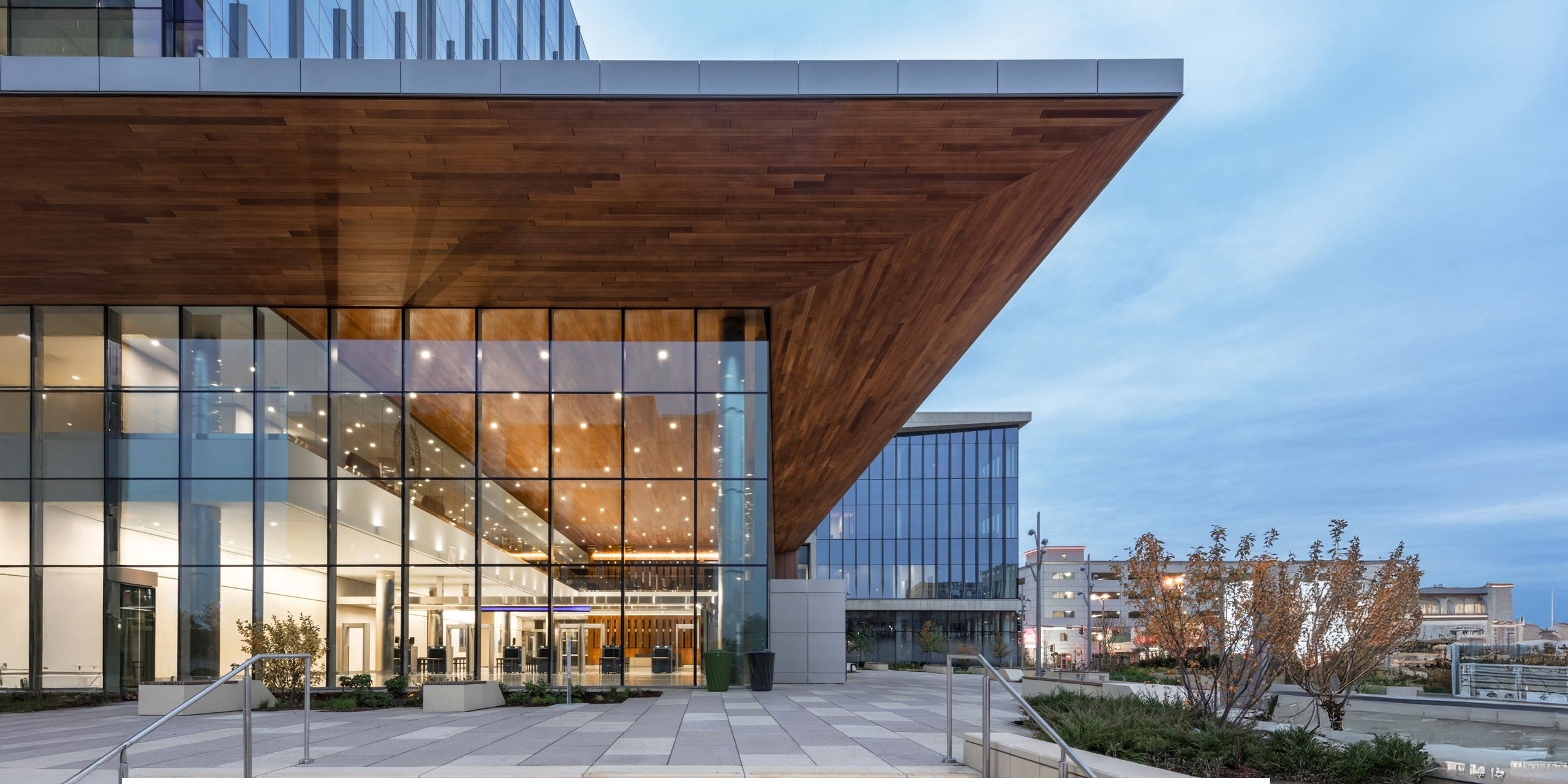
As public institutions face unprecedented scrutiny, courthouses have emerged as critical symbols of government accountability — or its absence. Aging, confusing, and often oppressive in their layout and function, many of today’s justice facilities send an unintended message: This system isn’t built for you. For communities already marginalized by structural inequities, the courthouse experience can amplify feelings of intimidation and exclusion.
Yet, architecture can help restore public trust. By reimagining courthouses not as bureaucratic fortresses but as civic assets rooted in transparency, safety, and accessibility, designers and judicial leaders can affirm democratic ideals through the built environment. The path forward begins not with blueprints but with a human-centered approach to justice design.
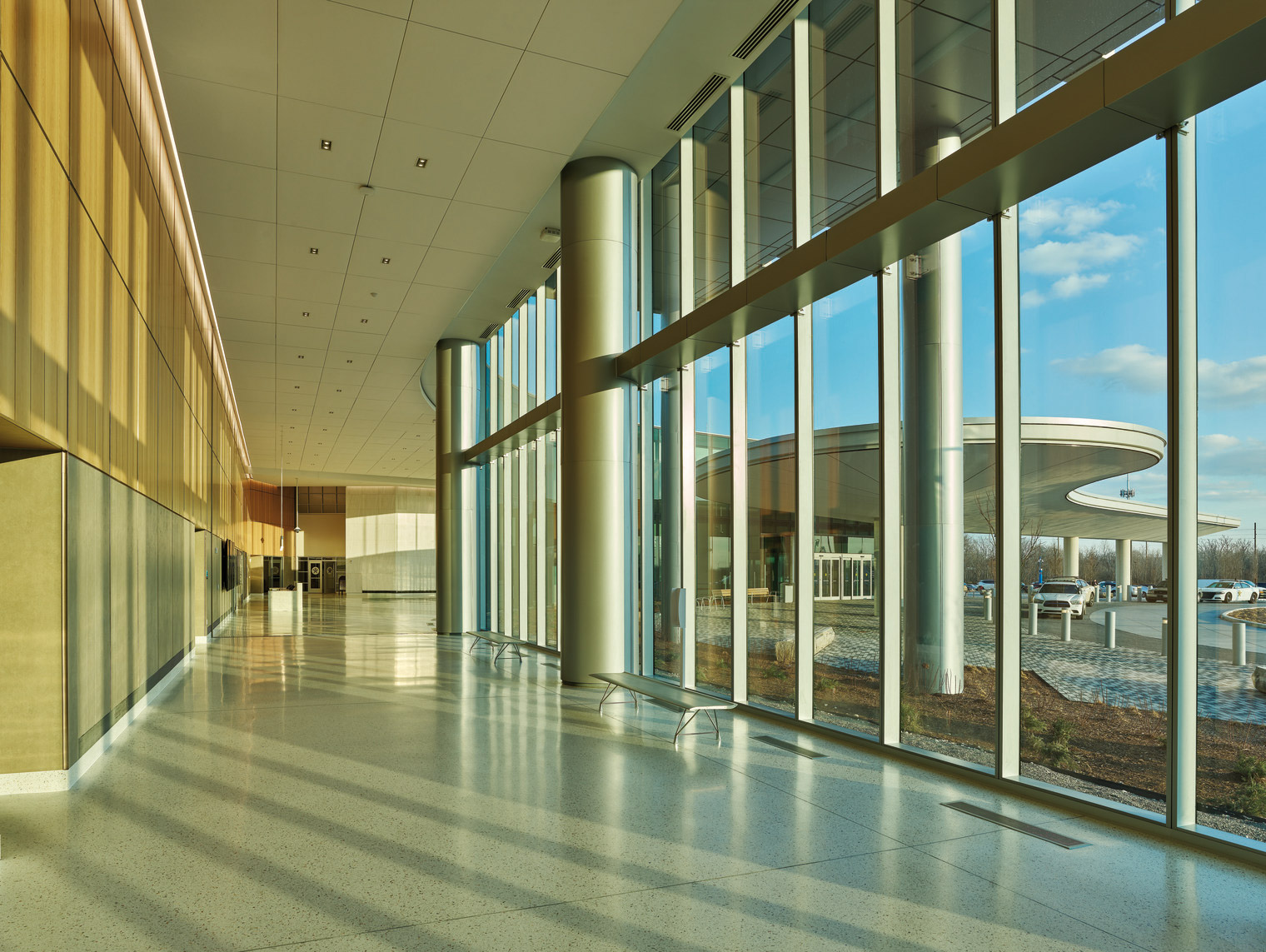
To begin rebuilding public trust, the first step is rethinking how courthouse environments affect the people who use them every day, starting with the most basic human experience of space.
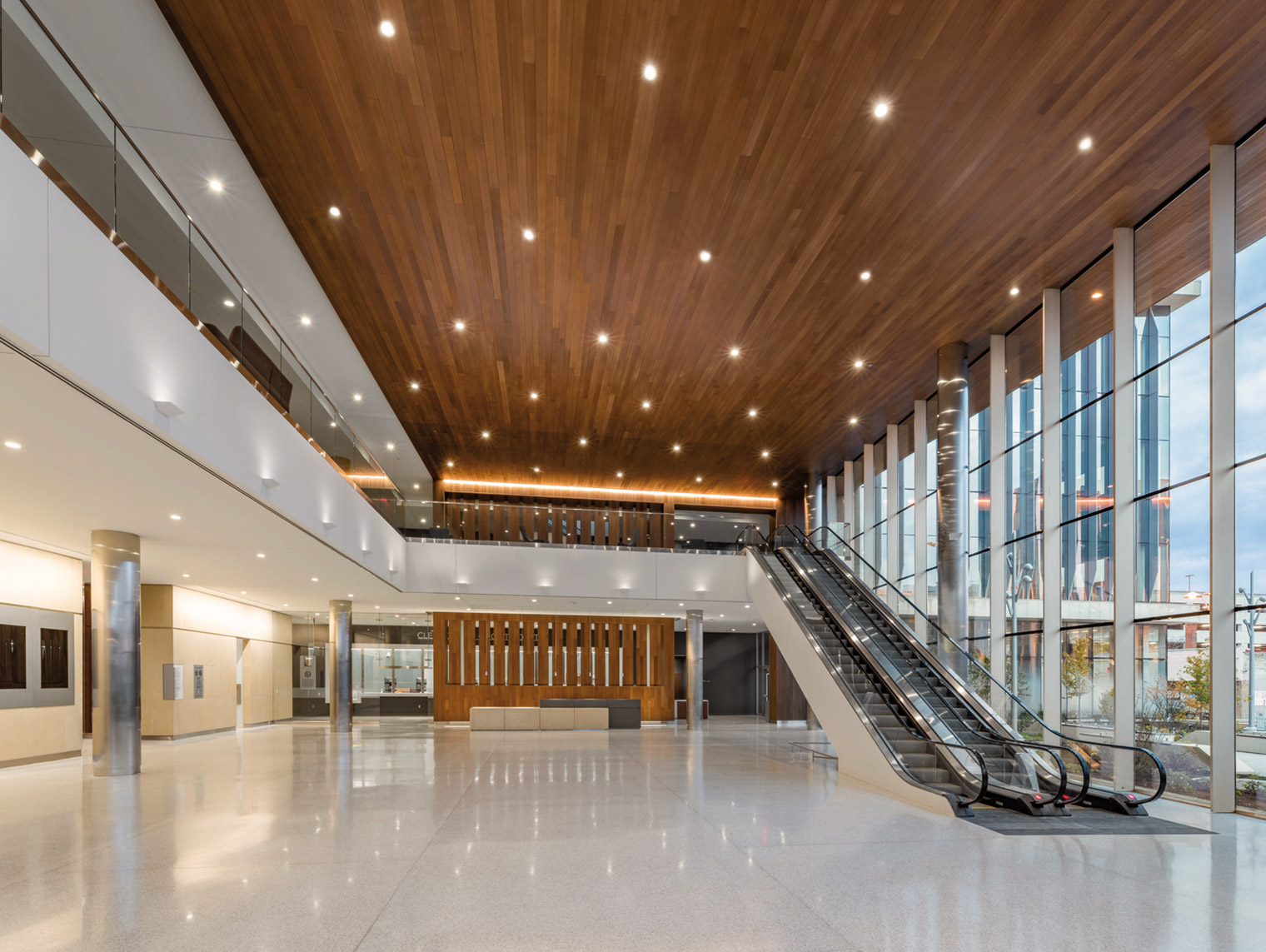
From Alienation to Access: Human-Centered Courts
Most courthouse projects begin with a realization that the physical environment is actively working against users, whether through confusing navigation, limited waiting areas, or outdated amenities. Unlike other civic buildings, courts serve people in times of vulnerability: defendants, victims, jurors, families, and staff all experience heightened stress within these spaces. That makes the architectural experience more than aesthetic; it’s emotional.
Too often, renovation projects focus solely on technical upgrades rather than a user or client-centered approach. A more effective approach starts with understanding user experiences through direct interviews and assessments. What do people feel as they move through the building? Where do they get lost? What makes them anxious?
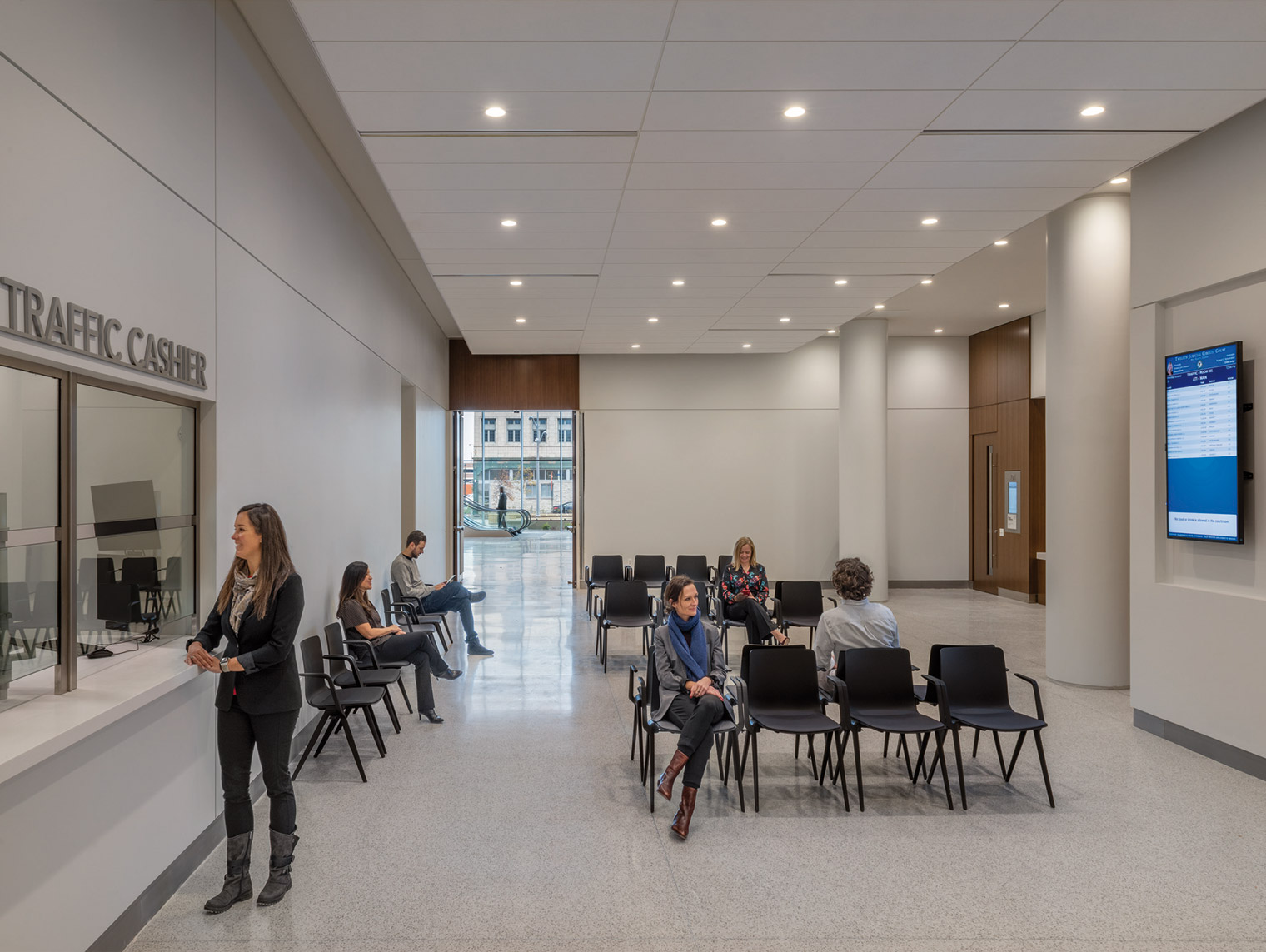
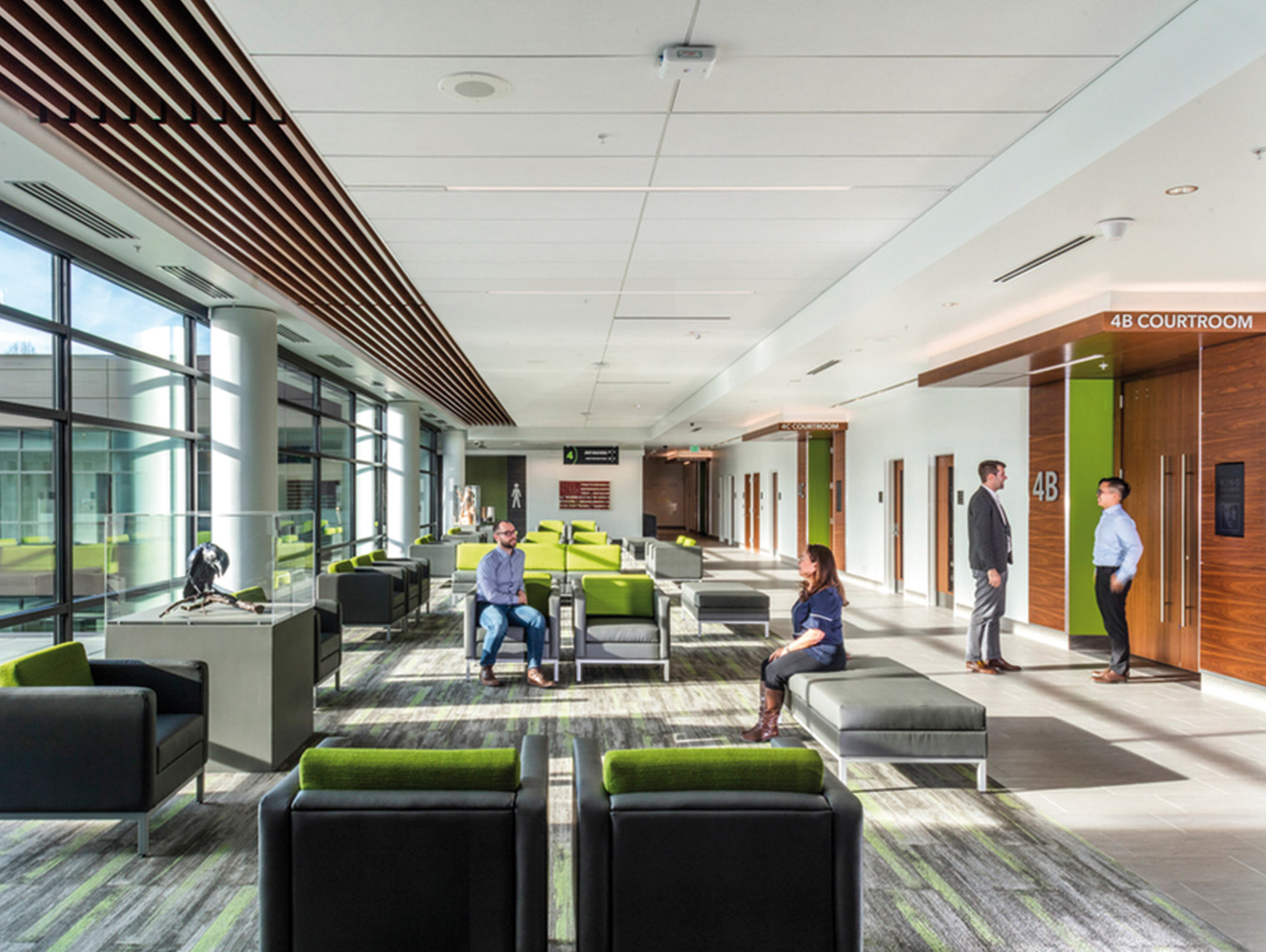
Simple but powerful interventions — clearer wayfinding inside and outside the building, improved signage, more dignified waiting areas, calming materials, access to daylight and views, choice in environment (stairs versus elevator, different waiting areas, etc.), and trauma-informed design — can have an outsized impact on restoring a sense of fairness and safety. These updates help everyone, from the first-time visitor to the long-serving judge, feel respected and secure in the space.
But improving the emotional experience of the courthouse isn’t just about calming aesthetics; it also requires confronting how movement through these buildings reinforces power dynamics and inequity.
Breaking the Pattern: Fixing Circulation Inequities
In many legacy court buildings, everyone — from a staff member to an in-custody defendant — enters and moves through the same corridors. This overlap not only poses serious security risks but also creates psychologically charged encounters that undermine the dignity of all parties. The only place where these paths should converge is the courtroom itself.
Designing distinct circulation paths for the public, staff, and defendants in custody is essential. These separations must be supported with appropriate signage, clear zoning, and architectural elements that subtly guide movement. Renovation efforts should prioritize circulation studies early in the planning process, starting with feasibility assessments that determine if the existing structure can support such divisions.
Court operations benefit, too: When people feel less threatened and more secure, proceedings run more smoothly. These design decisions are not just operational; they are symbolic, signaling that every person deserves safety and dignity within the justice system.
As circulation paths become more intentional and dignified, courts must also confront another invisible barrier to justice: unequal access to technology in an increasingly digital system.
Designing for Digital Equity
As the justice system adapts to virtual proceedings and online filings, the digital divide becomes an architectural issue. Post-pandemic operations demand greater flexibility — courts now support virtual hearings, digital document submissions, and remote communications. But not every user has a smartphone or understands how to navigate digital systems. That’s a justice problem.
Courthouses need to account for these disparities. Tech support kiosks, quiet zones for virtual meetings, and adaptable spaces for hybrid proceedings can help ensure access for all. Some jurisdictions have added staff dedicated to assisting with technology, particularly for individuals unfamiliar with online court portals. Law libraries are being expanded or reworked to accommodate space for these functions as well.
Importantly, these solutions require physical space. Buildings designed without adequate tech infrastructure or flexible multipurpose rooms are functionally obsolete. A modern courthouse does not just include broadband — it empowers equitable participation in a digital age. And just as digital infrastructure must be designed for inclusion, physical security must be designed for dignity, balancing protection with the need for openness and trust.
Security Without Oppression
Public safety is paramount in courthouse design, but many facilities overcorrect, creating environments that feel more like detention centers than civic and justice halls. While secure circulation is critical, excessive securitization can alienate the very people courts are meant to serve.
Instead, architects can achieve security through subtle spatial tactics. Zoning, layered access, and passive surveillance — such as glazed partitions or camera-monitored interview rooms — maintain safety while preserving openness. Staff-only areas can be restricted by key card access without walling off the building entirely. Public areas for paying fines or accessing records should feel welcoming, not punitive.
This balance is delicate but achievable. By thoughtfully separating restricted zones like holding areas and sally ports from general circulation and incorporating intuitive layouts, court buildings can feel open without being vulnerable. In doing so, the architecture communicates that safety and dignity are not mutually exclusive.
While thoughtful design can solve many architectural challenges, getting these projects off the ground requires long-term leadership, political will, and a clear vision for the role courts play in society.
The Role of the Champion: Building Momentum and Trust
Even with clear design goals, many courthouse projects stall before they begin. One of the greatest challenges is a lack of leadership continuity. Given the long timelines — often a decade or more from assessment to ribbon-cutting — project momentum must be carefully nurtured.
Here, the role of the project champion becomes essential. Champions are typically court administrators or government officials who work quietly behind the scenes, coordinating with judges, architects, and legislators to advocate for change. They must navigate political processes, secure funding, and, crucially, make the moral case for investing in justice infrastructure. Without them, ideas die in committee.
Too often, jurisdictions defer maintenance year after year, not realizing that a small investment in a feasibility study could unlock a much larger transformation. Conditions assessments — combined with space needs analyses and renovation-versus-rebuild comparisons — arm champions with the data they need to make the case for public investment.
Moreover, it’s important that judicial leaders recognize the value of storytelling. Articulating why a better courthouse matters — how it affects access to justice, public trust, and even employee retention — helps secure not just funding but lasting public support.
That leadership becomes even more critical as jurisdictions grapple with whether to renovate aging facilities or build new ones — decisions that must be grounded in comprehensive planning and rigorous data.
Long-Term Planning as a Moral Imperative
Every courthouse project should begin with an honest evaluation of existing assets and needs. This includes assessing the building’s structural lifespan, technological capacity, and functional fit. Sophisticated jurisdictions update their capital improvement plans every five years with this data, ensuring their facilities can meet both current and future demands.
But this effort shouldn’t stop at spreadsheets. Courts should consider broader community needs, such as whether a courthouse could share functions with other government services or if a renovation would better serve the county than a new build. These are complex decisions, and they demand rigorous analysis supported by architecture teams who can guide clients through the options with clarity and candor.
Ultimately, these investments are about more than space — they’re about values. A courthouse that supports timely trials, ensures safety, and invites civic participation isn’t just efficient — it is just.
In the end, these planning decisions are about more than just buildings or budgets; they are about what kind of justice system a community believes in and how architecture can embody that belief.
Conclusion: Justice is Here for You
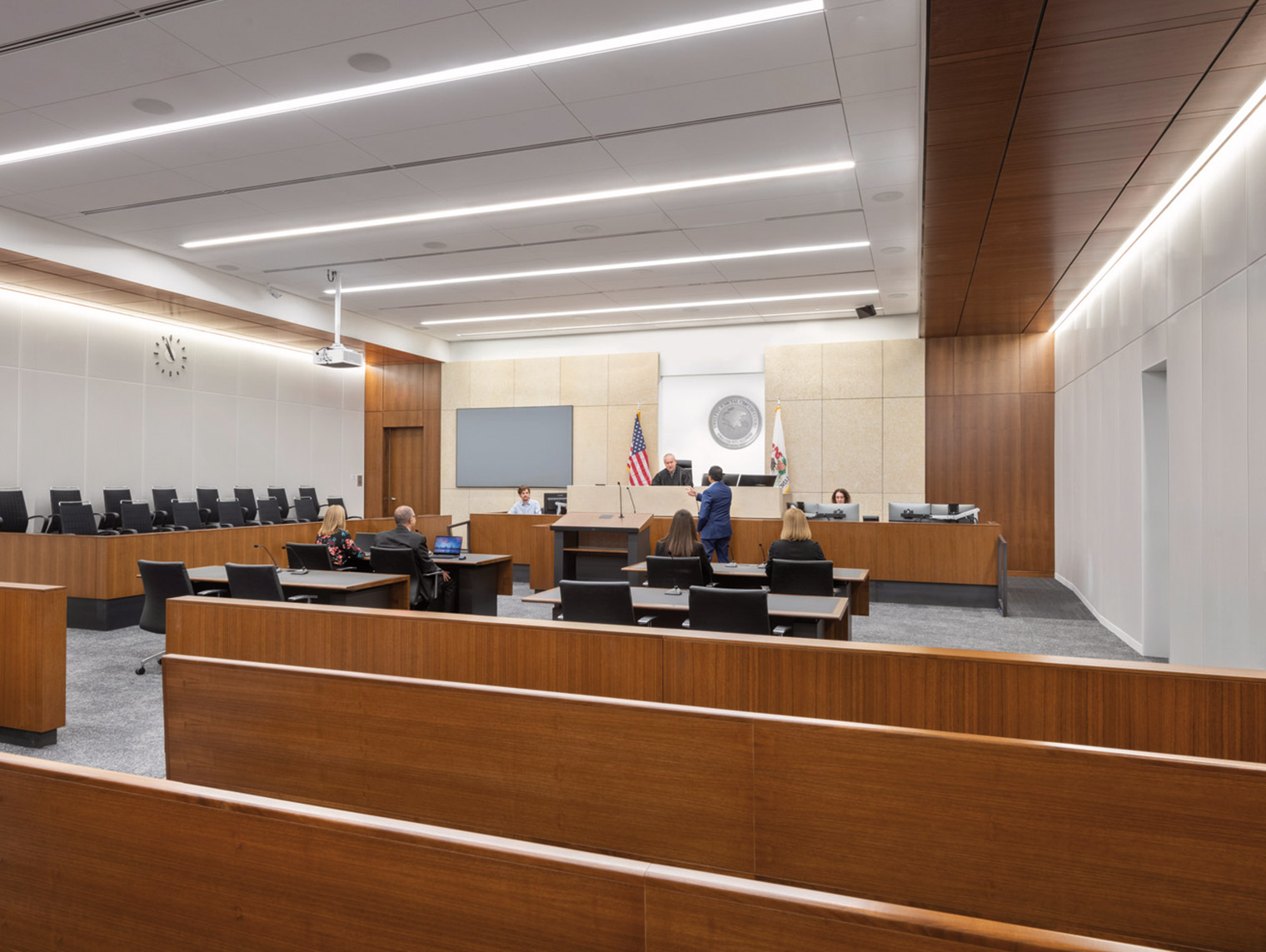
If justice is meant to be blind, then courthouse architecture needs to be anything but. It should see the vulnerable defendant, the overwhelmed parent, the overworked clerk, and the skeptical citizen, and welcome them all. Every architectural decision — every hallway, bench, and doorway — can reinforce or erode public trust.
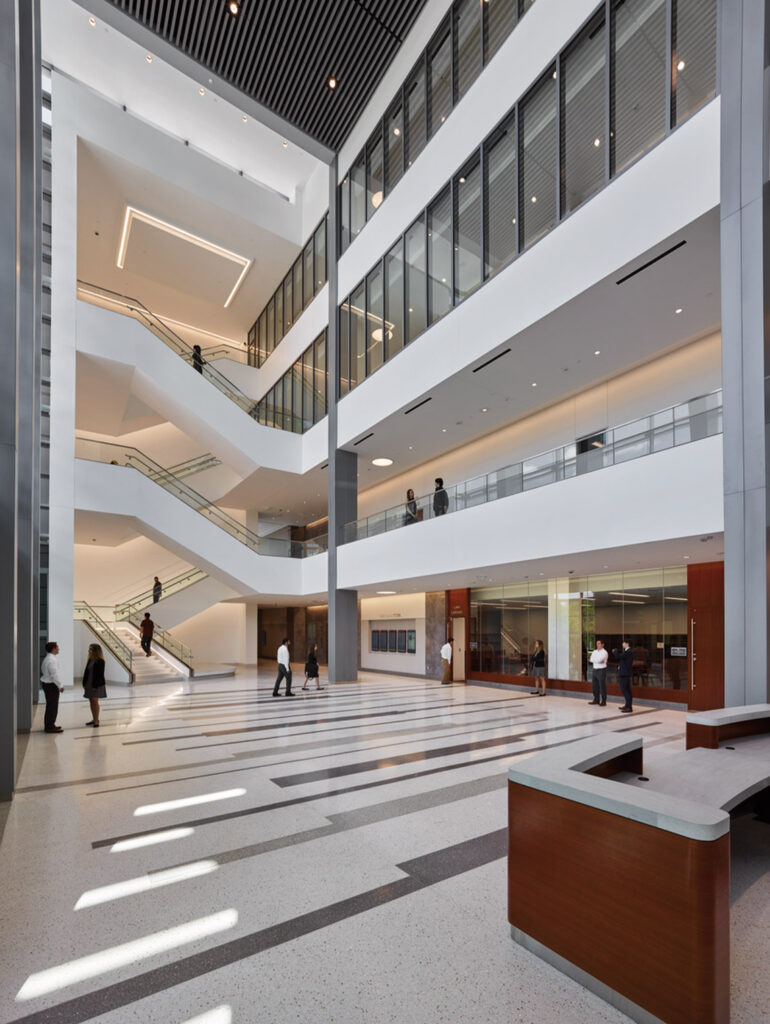
Judicial leaders and architects stand at a rare intersection of civic design and social equity. By designing for dignity, transparency, and inclusion, they do not just build better buildings — they rebuild faith in a system that too often feels out of reach. In a time when the legitimacy of institutions is on the line, what better message to send than this: Justice is here for you.
About the Author
Kristine Bishop Johnson, AIA, NCARB, LEED AP, is a director of HOK’s global Civic + Justice practice. Based in Washington, D.C., she has more than 20 years of experience in the programming, planning and design of justice facilities.